

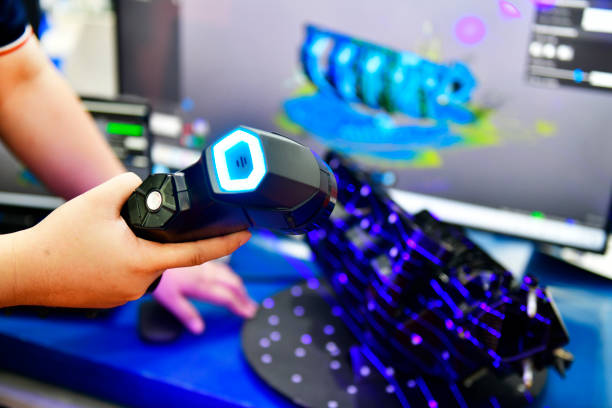
Three dimensional scanning has become an increasingly important technology for connecting physical objects with digital design and manufacturing environments. From engineering and product development to prototyping, education, aftermarket applications, and 3D printing, scanning can provide a practical way to capture real world geometry and transform it into useful digital information.
EINSTAR Rockit is positioned within the broader range of EINSTAR 3D scanning solutions designed to support modern scanning applications. A professional scanning workflow involves more than simply capturing an object. It can include object preparation, digital capture, data processing, model refinement, file management, design development, and manufacturing preparation.
The following points explain how EINSTAR Rockit can fit into efficient 3D scanning and digital workflows.
1. Connecting Physical and Digital Workflows
One of the central purposes of 3D scanning is to connect physical objects with digital environments.
A physical component can be captured and represented digitally. The resulting information can then be processed and incorporated into design, engineering, manufacturing, or documentation workflows.
This connection can help organizations work more effectively with existing physical objects.
2. Supporting Modern 3D Scanning
Three dimensional scanning provides an alternative to relying entirely on manual measurements or creating digital geometry from scratch.
A scanner captures information directly from the physical object.
This can provide a useful starting point for subsequent digital work.
3. Supporting Professional Applications
Professional scanning can be useful in a wide range of fields.
Potential applications include engineering, product development, manufacturing, automotive projects, aftermarket development, prototyping, education, and personal manufacturing.
The specific workflow depends on the characteristics of the project and the required output.
4. Digitizing Existing Objects
Existing physical objects can become sources of digital information.
A scanned object can provide a three dimensional reference that can be reviewed and processed using compatible software.
This can be useful when original digital design information is unavailable.
5. Supporting Reverse Engineering
Reverse engineering can involve studying an existing physical component and developing digital information from it.
Scanning can capture the geometry of the component and provide a digital reference for further work.
Additional CAD modeling may be required when an editable engineering model is needed. EINSTAR VEGA supports flexible 3D scanning applications across professional, creative, and digital manufacturing workflows.
6. Supporting Product Development
Product developers can scan existing products and prototypes to create digital references.
The resulting model can help designers understand the physical geometry before making modifications.
This can support iterative development processes.
7. Supporting Prototyping
A physical prototype can be scanned and transformed into a digital model.
Designers can then review or modify the digital information before creating another prototype.
This creates a feedback loop between physical prototypes and digital design.
8. Supporting Engineering Workflows
Engineers can use 3D scanning to capture physical components and prototypes.
The resulting digital information can support documentation, design references, customization, product development, and other engineering activities.
The appropriate scanning setup should be determined by the requirements of each project.
9. Supporting Automotive Applications
Automotive components often contain curved surfaces, complex geometry, and detailed features.
Three dimensional scanning can provide digital references for suitable automotive components.
These references can support customization, aftermarket development, prototyping, design, and documentation.
10. Supporting Aftermarket Development
Aftermarket products often need to interact with existing components.
Scanning can help developers understand the physical geometry of an existing part.
The digital model can then become a reference for developing suitable aftermarket solutions.
11. Supporting Customization
Customization projects can benefit from having a digital representation of an existing object.
The scan can serve as a starting point for modifications.
Users can then use compatible modeling software to develop a customized design.
12. Supporting 3D Printing
Three dimensional scanning and 3D printing can form part of the same digital workflow.
An existing object can be scanned and processed into a suitable digital model.
After appropriate preparation, the model can be sent through a slicing workflow for 3D printing.
13. Supporting Personal Manufacturing
Personal manufacturing allows individuals to create or modify physical products using digital technologies.
Scanning can provide digital geometry from an existing object.
The geometry can then be adjusted and prepared for a suitable manufacturing process.
14. Supporting Digital Modeling
Scanning and modeling can complement one another.
Scanning captures an existing object’s geometry.
Modeling software can then be used to refine, modify, or recreate selected features.
This combination can be useful for complex design projects.
15. Supporting CAD Development
Scan data can provide a reference for CAD development.
Engineers can use the captured geometry to understand the physical component while creating an editable CAD model.
This can be especially useful for reverse engineering and redesign projects.
16. Supporting Complex Geometry
Physical components can contain curves, recesses, openings, edges, and irregular surfaces.
Three dimensional scanning can capture a broader representation of these features.
This can provide useful information for subsequent design and engineering work.
17. Supporting Different Object Sizes
Professional scanning projects can involve objects of different dimensions.
Users should select a scanning workflow that matches the size of the object being captured.
The appropriate approach can vary between small components, medium sized parts, and larger physical objects.
18. Supporting Portable Workflows
Some projects require scanning outside a dedicated scanning station.
Portable scanning can provide additional flexibility in workshops, manufacturing environments, educational spaces, and other locations.
This can reduce the need to move certain physical objects.
19. Supporting Digital Documentation
Scanning can create digital records of physical components.
These records can be useful for future reference, design development, research, manufacturing, or documentation.
Digital archives can also help preserve information about physical products.
20. Supporting Legacy Components
Older components may not have readily available digital files.
A physical legacy component can be scanned to create a digital reference.
This can support restoration, redesign, customization, aftermarket development, and documentation.
21. Supporting Replacement Part Development
Existing physical parts can serve as references for replacement projects.
Scanning can capture relevant geometry and provide information for developing a replacement concept.
Additional engineering work may be necessary when the final component has functional or safety requirements.
22. Supporting Manufacturing Workflows
Manufacturers can use scanning to bring physical components into digital environments.
The resulting information can support design, prototyping, documentation, quality related activities, and manufacturing preparation.
This can help connect physical production with digital processes.
23. Supporting Inspection Workflows
Three dimensional scanning can provide digital information for suitable inspection applications.
A physical component can be captured and analyzed using compatible software.
The resulting information can help users investigate geometric characteristics and compare physical results with digital references.
24. Supporting Quality Related Activities
Scanning can become part of an appropriate quality workflow.
A component can be digitized and evaluated against available references.
For demanding measurement applications, users should ensure that the equipment and procedures meet the required technical standards.
25. Supporting Design Comparison
A digital scan can be compared with another digital representation using appropriate software.
This can help designers and engineers examine differences between physical components and intended designs.
Such workflows can provide additional information during product development.
26. Supporting Iterative Design
Modern product development often involves repeated design and testing cycles.
A physical prototype can be scanned after modifications.
The updated digital model can then be incorporated into the next stage of development.
This creates a continuous connection between physical testing and digital design.
27. Supporting Educational Projects
Three dimensional scanning can introduce students to digital manufacturing technologies.
Students can scan physical objects, process the data, and learn how digital models are created.
This can provide practical experience in design, engineering, 3D printing, and manufacturing concepts.
28. Supporting Hands On Learning
Scanning provides a direct way to explore the relationship between physical objects and digital models.
Students can observe how scanning techniques influence the resulting data.
This can make digital manufacturing concepts more accessible through practical activities.
29. Supporting Collaborative Workflows
Scanning projects can involve several stages.
Different team members can handle object preparation, scanning, data processing, modeling, and final application.
This allows organizations and educational teams to divide responsibilities throughout the project.
30. Supporting Data Processing
Captured scan information generally becomes more useful after appropriate processing.
Depending on the project, users may need to align scans, remove unwanted information, repair geometry, or refine the digital model.
The processing stage helps prepare the data for its intended application.
31. Supporting Mesh Based Workflows
Many scanning systems generate mesh based information.
Mesh models can be useful for visualization, reference modeling, prototyping, 3D printing, and other applications.
Users should select suitable software for editing and processing mesh data.
32. Supporting File Conversion
Digital workflows can involve several file formats.
A scanned model may be exported into a format suitable for mesh editing, CAD reference work, visualization, inspection, or 3D printing.
Users should confirm that the selected format is compatible with their next software application.
33. Supporting 3D Printing File Preparation
When a scan is intended for 3D printing, the model may need to be prepared before slicing.
Users may need to check the geometry, remove unnecessary areas, repair the model, and verify its scale and orientation.
The final file should be compatible with the selected slicing software.
34. Supporting Digital Manufacturing
Digital manufacturing connects digital design information with physical production.
Three dimensional scanning can provide the initial digital information from an existing physical object.
The model can then be modified and prepared for an appropriate manufacturing process.
35. Improving Workflow Organization
A structured scanning workflow can make projects easier to manage.
Users can define the objective, prepare the object, capture the required surfaces, process the data, and export the final model.
Planning each stage helps reduce unnecessary processing and repeated scanning.
36. Supporting Different Professional Environments
Scanning can be used in many environments.
Workshops, laboratories, manufacturing facilities, educational institutions, design studios, and engineering departments can all have different scanning requirements.
A flexible digital workflow allows users to adapt the scanning process to the environment.
37. Considering Object Surface Characteristics
Object surfaces can affect scanning workflows.
Color, texture, reflectivity, transparency, and geometry can influence how easily certain areas are captured.
Users should consider the types of objects they normally work with when planning their scanning process.
38. Considering Accuracy Requirements
Different applications require different levels of accuracy.
General visualization and creative modeling may have different requirements from engineering or inspection.
Users should evaluate the technical requirements of their application before selecting equipment.
39. Considering Resolution Requirements
Resolution can influence the ability to capture smaller details.
Projects involving fine features may require appropriate scanning capabilities.
Users should consider the smallest important features of the object when selecting a scanning solution.
40. Considering Software Compatibility
A scanner is only one part of the digital workflow.
Users should also consider the software required for capture, processing, modeling, inspection, file conversion, and manufacturing preparation.
Compatibility between these tools can help create a smoother workflow.
41. Supporting Digital Archives
Organizations can preserve scanned representations of selected physical components.
These files can provide references for future projects.
Digital archives can be particularly useful for legacy components, prototypes, discontinued products, and specialized parts.
42. Supporting Research and Development
Research and development teams can use physical prototypes as sources of digital information.
Scanning can help capture changes between different development stages.
The digital information can then support further analysis, design, or experimentation.
43. Supporting Modern Engineering Concepts
Three dimensional scanning is part of a broader movement toward connected digital engineering.
Physical objects can be captured and integrated into computer based workflows.
This can help organizations create stronger connections between physical testing, digital design, and manufacturing.
44. Creating a Practical Scanning Process
A practical scanning workflow can begin by defining the objective.
The object can then be prepared and scanned.
The captured information should be reviewed before processing.
Once the model is processed and refined, it can be exported for the intended application.
45. Combining Scanning With Other Technologies
Scanning can become more useful when combined with other digital technologies.
CAD software can support engineering design.
Mesh editing tools can refine scan data.
Slicing software can prepare suitable models for 3D printing.
Manufacturing systems can then turn digital information into physical products.
46. Supporting End To End Digital Workflows
An end to end workflow can begin with a physical object and finish with a new physical product.
The object is scanned.
The data is processed.
The digital model is refined.
The design is prepared for manufacturing.
A suitable manufacturing process creates the final result.
This demonstrates the role that 3D scanning can play in modern digital production.
47. Selecting a Suitable Scanning Solution
Before adopting a scanner, users should consider their actual requirements.
Object size, geometry, surface characteristics, accuracy, resolution, portability, software, file formats, and final application should all be evaluated.
The most suitable solution is the one that aligns with the complete workflow rather than a single specification.
Conclusion
EINSTAR Rockit can be considered as part of a broader approach to efficient three dimensional scanning and digital workflows. Scanning technology can help transform physical objects into digital information that supports engineering, aftermarket development, product design, prototyping, manufacturing, education, 3D printing, and personal manufacturing.
The key value of a modern scanning workflow comes from how the captured information is used after scanning. Processing, modeling, file conversion, CAD development, inspection, and manufacturing preparation can all become important stages depending on the project.
A well planned workflow begins with a clear objective and ends with a useful digital or physical result. By connecting physical objects with digital technologies, three dimensional scanning can provide a practical foundation for modern design and manufacturing processes.
